

Discover how to select the perfect heavyweight knit that carries the soul of the coast, balancing maritime tradition with a comfort that feels like home, no matter where you are.
Defining Heavyweight Coastal Knitwear: More Than a Sweater
In the world of fast fashion, a sweater is often just a sweater. It is a seasonal item, chosen for a trend and discarded when it fades. But heavyweight coastal knitwear operates on a different plane. It isn’t merely a garment; it is a piece of architecture, a sensory anchor, and a quiet statement of endurance. It represents a deliberate shift toward slow fashion—a commitment to heirloom-quality pieces that gather stories instead of dust.
So, what truly defines it? It begins with the materials and the method.
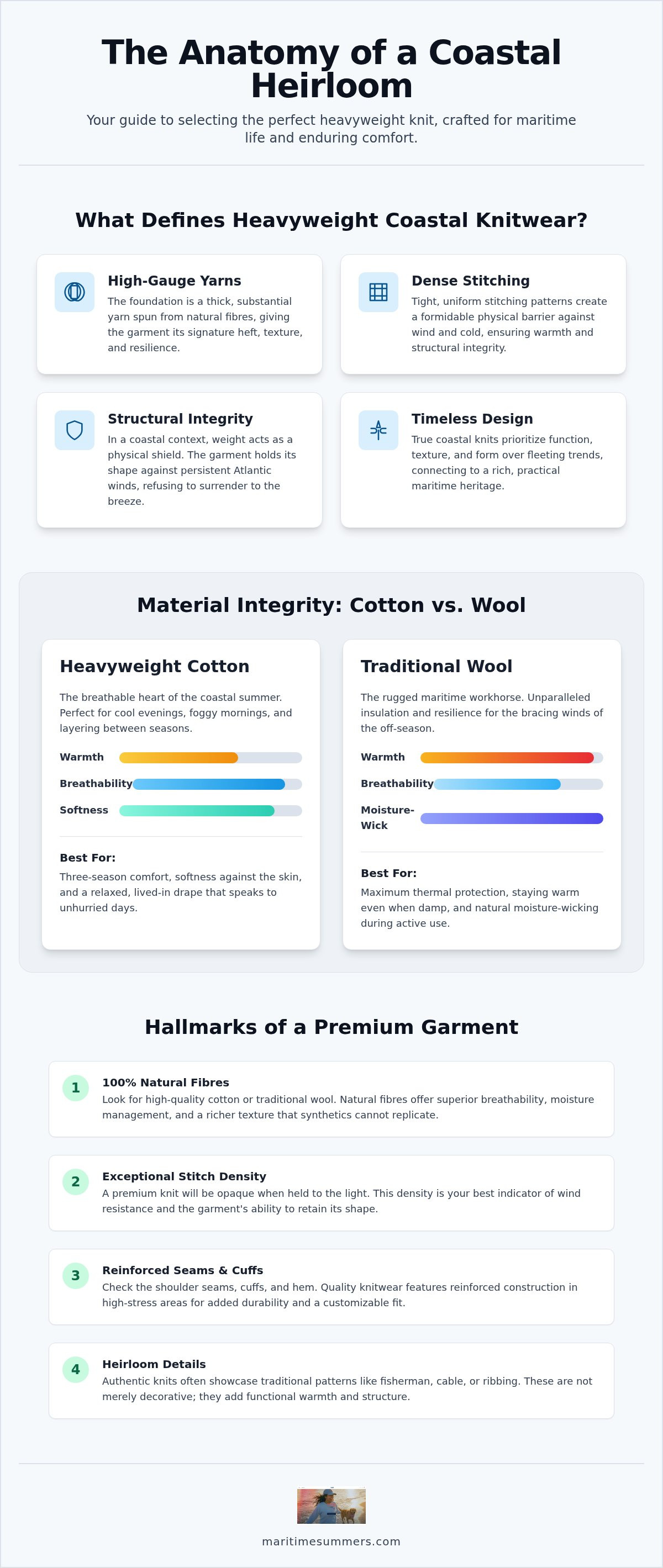
- High-Gauge Yarns: The foundation is a thick, substantial yarn, spun from natural fibres that lend the piece its signature heft and texture.
- Dense Stitching: Unlike their lightweight counterparts, these knits feature tight, dense stitching patterns. This structure is not just for show; it creates a formidable barrier against the elements.
- Structural Integrity: In a coastal context, weight serves as a physical shield against the damp, persistent Atlantic winds. It holds its shape, refusing to surrender to the breeze.
- Timeless Design: True coastal knits prioritize texture and form over fleeting trends. Their beauty lies in their function and their connection to a rich maritime heritage.
The Sensory Appeal of Thick Textures
To slip on a piece of heavyweight coastal knitwear is to experience a unique form of comfort. There is a grounding quality to its weight—a gentle, reassuring pressure that feels like an embrace. It’s a feeling of being protected and secure. The tactile rhythm of its construction, from the deep channels of a fisherman’s rib to the intricate paths of a cable knit, engages the senses in a way that lighter fabrics cannot.
This is the nostalgic warmth of tradition. It’s the memory of a grandparent’s favourite sweater, the feeling of a bonfire on a cool beach, the quiet comfort of being home. It’s a physical sensation that connects directly to an emotional state—one of calm, resilience, and unhurried living. For those who have left the coast, it's a tangible link to a place that still lives within them. For those who have only visited, it's a way to carry that profound sense of peace into their daily lives.
Why Weight Matters in Maritime Environments
The significance of a heavy knit goes far beyond feel. In the unique climate of the Atlantic coast, its functional benefits are undeniable. This is where thoughtful design meets the raw demands of nature.
First is the science of insulation. The dense structure of a heavy knit traps air within its fibres, creating a natural insulating layer. In the humid, cool air of the coast, this is crucial for maintaining warmth without causing overheating. The garment breathes, but it protects.
Second is durability. The abrasive nature of salt air and the physical demands of an active coastal life require a garment that can withstand wear. Heavier, tightly knit fibres are inherently more resistant to pilling, stretching, and the subtle degradation caused by salt. This is a piece built to last for decades, not just a season.
Finally, there is the "shield" effect. A well-constructed heavy knit provides a remarkable degree of protection from the wind, often eliminating the need for a synthetic outer shell on blustery but not stormy days. It is a self-contained ecosystem of comfort, offering a natural defence against the elements.
Essential Features of Premium Coastal Knitwear
When you are ready to invest in a piece of heavyweight coastal knitwear, knowing what to look for is paramount. Beyond the simple fact of its weight, several key features distinguish a truly exceptional garment from a mass-market imitation. These are the details that signal quality, longevity, and an authentic connection to maritime tradition.
- 100% Natural Fibres: Look for materials like high-quality cotton or traditional wool. Natural fibres offer superior breathability, moisture management, and a richer texture that synthetics can never replicate. They work with your body and the environment, not against them.
- Exceptional Stitch Density: Hold the garment up to the light. A premium knit will be opaque, with tight, uniform stitches. This density is your best indicator of wind resistance and the garment's ability to retain its shape over time.
- Reinforced Seams and Cuffs: Check the shoulder seams, cuffs, and hem. Quality knitwear features reinforced construction in these high-stress areas. Details like "turn-back" cuffs are not just stylistic; they add durability and allow for a customizable fit.
- Heirloom Details: Authentic coastal knitwear often showcases traditional patterns like fisherman, cable, or intricate ribbing. These are not merely decorative; they are part of a functional heritage, designed to add warmth and structure.
Material Integrity: Choosing Between Wool and Cotton
The choice between wool and cotton is less about which is "better" and more about which is right for your lifestyle and the specific coastal moments you envision. Each fibre possesses a distinct character and purpose.
Cotton is the breathable heart of the coastal summer. A heavyweight cotton knit is the perfect companion for a cool evening by the water or a foggy morning walk. It provides substantial warmth without the risk of overheating, making it incredibly versatile for layering. It is soft against the skin and offers a relaxed, lived-in drape that speaks to quiet, unhurried days. It's the feeling of comfort and ease, ideal for the gentle transition between seasons.
Wool, on the other hand, is the traditional maritime workhorse. Its insulating properties are legendary, providing exceptional warmth even when damp. Wool is naturally moisture-wicking, pulling perspiration away from the body to keep you dry and comfortable. For those facing the bracing winds of the off-season or seeking maximum thermal protection, a well-crafted wool sweater is an unparalleled ally. It is the embodiment of rugged resilience and enduring warmth.
Stitch Patterns and Their Functional Roles
The textured patterns that define coastal knitwear are a language in themselves, a beautiful fusion of artistry and practicality passed down through generations.
- The Fisherman Knit: Also known as an Aran knit, this style features a combination of textures, most notably the cable. Originally, different patterns were said to represent different fishing families or villages. The complex, raised stitches create a thick fabric with countless tiny air pockets, dramatically increasing its insulating power.
- Ribbed Textures: Simple ribbing (a pattern of alternating knit and purl stitches) creates a fabric with natural elasticity. This is why it’s used so often for cuffs, collars, and hems—it provides a snug, comfortable fit that effectively seals out drafts and keeps warmth in.
- Cable Knits: The iconic cable is more than just beautiful. The twisting, overlapping stitches create a dense, rope-like structure that adds significant warmth and durability to the garment. It is a visual and functional testament to the sweater's strength and heritage.
Navigating Coastal Conditions: Salt Air, Wind, and Warmth
Life on the coast is a conversation with the elements. The air is different here—thicker, scented with salt, and always in motion. True heavyweight coastal knitwear is designed to thrive in this environment, acting as a trusted intermediary between you and the weather. It understands the specific challenges of the Atlantic and is engineered to meet them with grace and resilience.
The key is a balance of protection and breathability. A coastal garment must shield you from the wind and dampness, but it must also allow your skin to breathe to prevent the clammy, uncomfortable feeling that can come with changing humidity levels. This is where the superiority of natural fibres truly shines. They are inherently adept at thermoregulation, adapting to both your body temperature and the ambient conditions.
- Resilience to Salt Air: The microscopic salt crystals in sea spray can be abrasive to delicate fabrics. Heavyweight knits, with their robust fibres and dense construction, are built to withstand this environment, maintaining their structure and colour season after season.
- Defence Against the Breeze: The Atlantic wind has a unique ability to find its way through lesser garments. The tight weave of a quality coastal knit acts as a windbreak, preventing "heat leak" and keeping your core temperature stable.
- Humidity Management: Natural fibres like cotton and wool excel at managing moisture. They can absorb a significant amount of water vapour from the air without feeling wet to the touch, ensuring you stay comfortable as the fog rolls in and out.
- The Importance of Fit: A slightly relaxed fit is not just a style choice; it's functional. It allows for a thin layer of air to circulate close to the body and provides ample room for layering a lighter shirt underneath, creating a versatile system for all-day comfort.
Protecting Your Knits from the Elements
Caring for your knitwear is an act of stewardship. A well-made piece is an investment, and with proper care, it can become a lifelong companion. The good news is that high-quality natural fibres are remarkably self-sufficient.
Wool, for instance, is naturally antimicrobial and odour-resistant, meaning it requires far less frequent washing than synthetic garments. Often, simply airing it out is enough to refresh it. When washing is necessary, a gentle hand wash in cool water with a specialized wool soap is best. Cotton knits are generally more tolerant of machine washing on a delicate cycle, but both should always be laid flat to dry, away from direct heat, to prevent stretching and distortion.
When storing your heavy knits, always fold them. Hanging can cause the weight of the garment to pull on the shoulders, permanently altering its shape. In a damp coastal climate, ensure your closet has good air circulation to prevent any mustiness from setting in.
Breathability vs. Insulation in Heavy Knits
The genius of a heavyweight cotton knit lies in its ability to be both incredibly warm and surprisingly breathable. It’s a paradox that makes it the ultimate transitional piece. The secret is in the structure. While the dense knit provides a powerful shield against wind, the natural cotton fibres themselves allow air and moisture to move freely. This means you get the cozy, insulating benefits without feeling stifled or overheated.
This quality is essential for a typical coastal day, where a sunny afternoon can quickly give way to a cool, foggy evening. Your knitwear needs to adapt with you. It should feel just as comfortable over a t-shirt at midday as it does layered for a walk along the shore after sunset. This natural thermoregulation is the hallmark of a thoughtfully designed garment, providing a seamless experience of comfort no matter what the Atlantic weather decides to do.
Styling Your Coastal Wardrobe: A Maritime Perspective
The coastal aesthetic is not about trends; it is a philosophy. It is rooted in practicality, comfort, and a quiet, understated elegance that mirrors the natural environment. It’s about building a wardrobe of reliable, beautiful pieces that work together effortlessly. At the centre of this wardrobe is the heavyweight coastal knitwear—the anchor piece that sets the tone for everything else.
This perspective can be cultivated anywhere. It's an approach to dressing that values quality over quantity and timelessness over novelty. It's about capturing that unhurried, salt-of-the-earth feeling, whether you're walking on a wharf in Nova Scotia or navigating a busy street in a downtown core.
- Layering is Key: Coastal living is a masterclass in layering. Start with a light, breathable base like a soft cotton t-shirt or a simple long-sleeve. Your heavy knit is the essential mid-layer, providing the bulk of your warmth and texture.
- Embrace a Natural Palette: Look to the shoreline for your colour inspiration. The soft creams of sand and seafoam, the deep blues and greys of the water and stone, and the warm, earthy tones of driftwood create a palette that is both soothing and sophisticated.
- Play with Textures: The power of a heavy knit is amplified when paired with contrasting fabrics. Combine its chunky texture with the smooth crispness of a linen pant, the ruggedness of worn-in denim, or the softness of a pair of corduroys.
- Transition with Ease: A premium knit has the unique ability to elevate any outfit. It can be thrown over a simple dress for an evening out or paired with casual shorts for a beach bonfire, making the transition from day to night seamless and stylish.
Building a Coastal Capsule Wardrobe
A capsule wardrobe is about intentionality. It’s a curated collection of essential items that can be mixed and matched to create a wide range of outfits. To build one around your heavyweight knit, focus on versatile, high-quality companions.
Start with a foundation of well-fitting trousers in neutral colours—classic denim, comfortable chinos, or relaxed linen pants. Add a few high-quality t-shirts and a crisp button-down shirt. For footwear, consider durable leather boots, simple canvas sneakers, or classic boat shoes. The colour story should feel cohesive, echoing the Atlantic horizon: a blend of deep navies, soft greys, warm whites, and perhaps a single accent colour, like the muted green of sea grass or the faded red of a buoy.
Finally, select a few key accessories. A simple cap for sunny days, a soft scarf for extra warmth, and a durable canvas tote bag complete the look. Each piece should be chosen for its longevity and its ability to complement the quiet strength of your knitwear.
The Quiet Sophistication of Oversized Silhouettes
There is a reason why the silhouette of coastal knitwear often leans toward a relaxed, slightly oversized fit. This is a choice that is both functional and deeply stylistic. Functionally, a roomier fit allows for easy layering and promotes air circulation, enhancing the garment's comfort across a range of temperatures.
Stylistically, it projects an attitude of ease and unhurried confidence. It is a silhouette that feels comfortable and lived-in, not restrictive or formal. It moves with you. To balance the volume of a heavy, oversized top, pair it with more tailored or slim-fit bottoms. This creates a pleasing contrast and a silhouette that is intentional and sophisticated, yet utterly relaxed. It is the physical expression of the coastal state of mind: calm, comfortable, and quietly self-assured.
Discovering Your Next Heirloom with Coast
At Coast, we don’t just sell apparel; we celebrate a state of mind. Our brand was born from a deep and abiding love for the East Coast—for its rugged beauty, its gentle pace, and the profound sense of peace it offers. It’s a feeling that stays with you, a memory that calls you back. We create thoughtfully designed goods for those who carry the coast in their hearts, whether they live by its shores or long for them from afar.
Our collection is inspired by the places that feel like home. It is built on a foundation of durability, comfort, and timeless maritime aesthetics. We believe that the best products are the ones that become quiet companions to your most relaxed and cherished moments. That is why we prioritize the emotional resonance of our goods, focusing on the feeling they evoke and the stories they will one day tell.
- We celebrate the East Coast state of mind through thoughtfully designed apparel.
- Our knitwear is inspired by the places, textures, and colours that feel like home.
- We prioritize the emotional connection to our goods over aggressive sales.
- Our collection is designed to be a quiet companion to your most relaxed moments.
Our Philosophy of Quiet Coastal Luxury
True luxury isn't about loud logos or fleeting trends. It is about quality, intention, and a deep connection to the things you own. It is the feeling of a perfectly weighted cotton knit against your skin, the subtle scent of salt in the air, the sound of waves on a quiet morning. Our philosophy is to move away from the noise and toward this understated elegance.
We focus on the atmosphere of coastal life—the slow living, the meaningful observations, the comfort of a well-made garment. The durability of our apparel is central to this vision. Each piece is built for discovery, for quiet mornings and long afternoons, for becoming a trusted part of your life's journey.
Bringing the East Coast Aesthetic Home
You don't have to live on the Atlantic to feel its pull. For the many who have moved away, or for those who have visited and left a piece of their heart behind, our apparel serves as a tangible connection. It is a way to wrap yourself in a memory, to carry the comfort and character of the East Coast with you, no matter where you are.
A Coast knit is more than an item of clothing; it's a portable piece of home. It’s the feeling of returning to a place of peace and belonging. With easy online shopping and national shipping across Canada, we make it simple to bring that quiet, sophisticated East Coast aesthetic into your life. It’s an invitation to slow down, to breathe deeper, and to connect with a timeless way of being.
Explore our collection of coastal-inspired apparel and loungewear.
Frequently Asked Questions
- What makes a sweater "heavyweight" coastal knitwear?
-
Heavyweight coastal knitwear is defined by its use of thick, high-gauge yarns (typically cotton or wool) and a very dense stitch pattern. This construction gives it substantial physical weight and makes it an effective barrier against wind and cool, damp air, unlike lighter, more open-knit sweaters.
- Is heavyweight knitwear too hot for a Canadian summer?
-
While it might be too warm for a hot, humid day in the city, it's perfectly suited for a typical Canadian coastal summer. Evenings by the water, foggy mornings, and windy days often require a substantial layer. A heavyweight knit made from a breathable natural fibre like cotton provides warmth without causing overheating.
- How do I care for my heavyweight cotton sweaters in salt air?
-
Salt air isn't as damaging to high-quality cotton as you might think, but regular care helps. After exposure, give the sweater a good shake to dislodge any salt crystals. Wash it according to the label, typically on a gentle cycle with mild detergent, and always lay it flat to dry to maintain its shape.
- Can I wear heavyweight knits for layering in the winter?
-
Absolutely. A heavyweight knit is an excellent mid-layer for winter. Its dense structure traps heat effectively. Wear it over a long-sleeve base layer and under a waterproof or windproof shell for a warm, breathable system that can handle even the coldest Canadian winters.
- Why are natural fibres better for maritime environments?
-
Natural fibres like wool and cotton are superior in maritime climates because of their breathability and moisture-wicking properties. They adapt to changing humidity, pulling moisture away from your skin to prevent a "clammy" feeling, and provide excellent insulation—even when damp, in the case of wool.
- What is the best way to store heavy knits to prevent stretching?
-
Never store heavyweight knits on a hanger. The weight of the garment will pull on the shoulder seams and cause it to stretch and lose its shape over time. The best method is to fold it neatly and store it on a shelf or in a drawer.
- How does coastal knitwear differ from standard city sweaters?
-
The primary difference is functional design. Coastal knitwear is built with the specific challenges of a maritime environment in mind: wind resistance, durability against salt air, and warmth in damp conditions. City sweaters are often more trend-focused and may use lighter knits or synthetic blends not suited for the coast.
- Should I size up for a traditional maritime look?
-
Many traditional maritime sweaters have a naturally relaxed or slightly oversized fit to allow for layering and ease of movement. We recommend starting with your true size, as our pieces are often designed with this comfortable silhouette in mind. If you prefer a significantly oversized look, then sizing up could be an option.