

Picture a quiet morning on the Atlantic coast, where the mist clings to the shoreline and the only warmth comes from your favourite heavyweight wool sweater. It's a garment that has seen you through salt-sprayed walks and slow Sunday coffees, becoming a soft, reliable piece of your personal history. Yet, there's often a lingering fear that one wrong move in the laundry room could ruin its shape or leave it marred by pilling. You want your investments to last, but the uncertainty of handling delicate natural fibres can feel overwhelming.
We understand that premium knitwear care is about more than just cleanliness; it's a ritual of preservation for the things you love. By embracing a slower, more intentional approach to maintenance, you can protect your knits from the harsh effects of salt air and time. This guide offers a rhythmic, easy-to-follow checklist that will give you the confidence to care for your staples at home. You'll discover how to wash, dry, and store your pieces so they look and feel new for years to come.
Key Takeaways
- Discover why a slow, intentional approach to maintenance is the key to protecting the integrity and soft texture of your heavyweight knits.
- Learn the "Rest and Restore" rule to help your garments regain their natural shape between coastal adventures and daily wear.
- Master the essential steps of premium knitwear care, from the gentle washing ceremony to the precise art of blocking for a perfect fit.
- Find out how to safely remove pilling and refresh your staples, ensuring they age gracefully and develop a storied, personal patina.
- Gain the confidence to handle high-quality natural fibres at home, preserving the warmth and comfort of your pieces for years to come.
The Philosophy of Slow Care: Why Premium Knitwear Requires a Different Approach
There is a specific weight to a well-made sweater. It is a heavy, comforting presence that settles on your shoulders like a familiar hand. These pieces aren't meant to be rushed through a harsh machine cycle. They demand a different tempo. When you pull on a coastal staple, you feel the texture of the knit and the warmth of the natural fibres. This isn't just clothing; it's a sensory experience that connects you to the landscape. To keep that feeling alive, we must move away from the frantic pace of modern laundry habits.
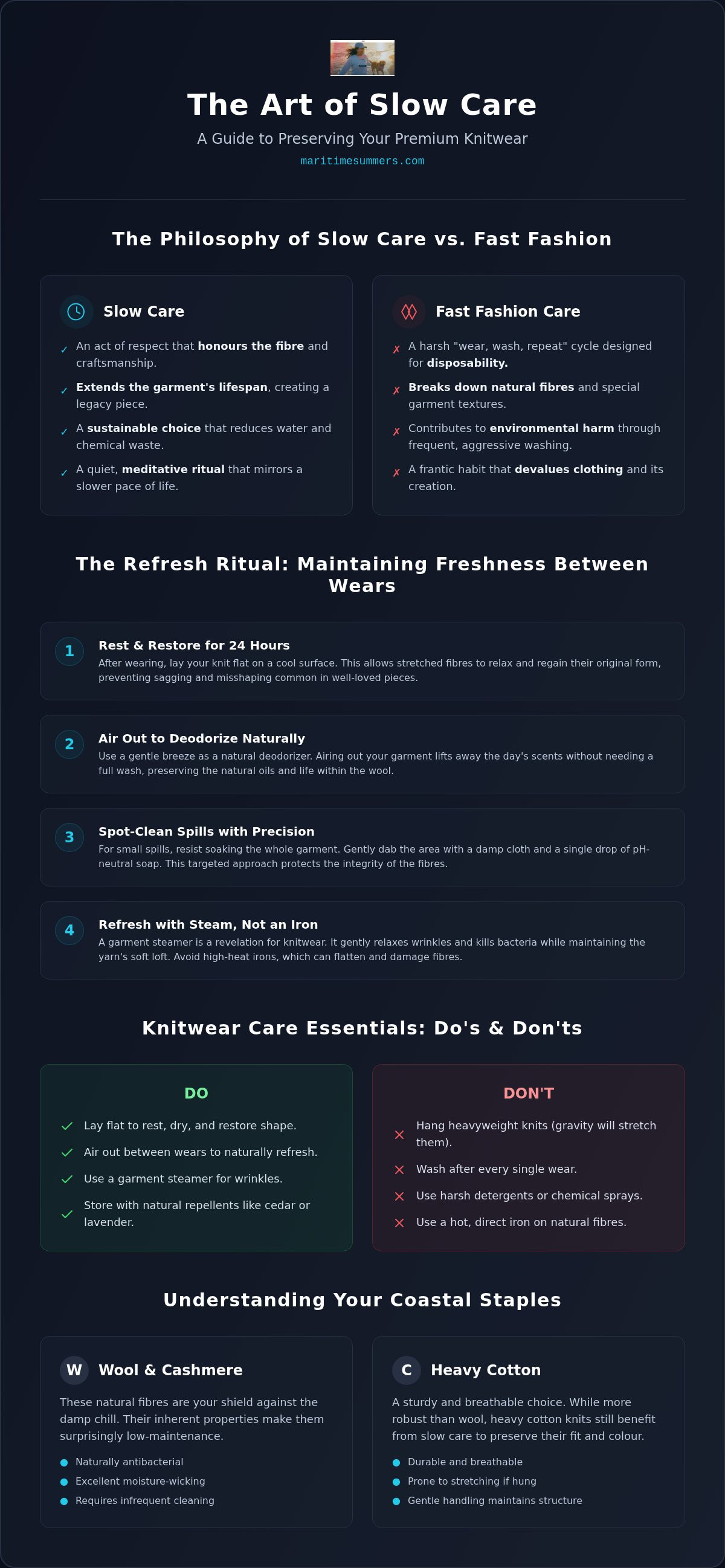
The standard "wear, wash, repeat" cycle of fast fashion is designed for disposability. It breaks down the very things that make a garment special. In contrast, premium knitwear care is an act of respect for the material and the labour that went into its creation. It is about "honouring the fibre," understanding that natural materials have their own rhythm. They possess a structure that responds to gentle handling and a spirit that thrives when given the space to rest.
Maintenance can be a quiet moment of reflection. It mirrors the Atlantic lifestyle, where the ebb and flow of the tide dictates the day. Taking the time to care for a garment allows you to slow down and appreciate the small details. It's a meditative ritual that ensures your favourite pieces remain as resilient as the coastline itself.
Understanding Your Coastal Staples
In the Canadian climate, a sweater is a necessity. It is a shield against the bone-chilling dampness of a spring morning and the dry, biting heat of an indoor hearth. Many East Coast clothing brands prioritize materials like wool, cashmere, and heavy cotton because they understand these environmental demands. To care for them properly, you must first understand the properties of wool and other natural fibres. These materials are naturally antibacterial and moisture-wicking, meaning they don't require frequent, aggressive cleaning. A premium garment is designed to evolve with you, gaining a soft patina of age that only comes through thoughtful handling.
The Environmental Impact of Thoughtful Maintenance
Choosing a slower path for premium knitwear care is a deeply sustainable choice. By avoiding unnecessary dry cleaning and harsh detergents, you reduce water waste and limit the release of chemicals into our local ecosystems. It's a form of coastal living that values quality over quantity. When a garment is treated with care, its lifespan extends far beyond a single season. It becomes a legacy piece, a storied item that can be passed down through generations, carrying with it the warmth of the memories it has witnessed.
The Refresh Ritual: Maintaining Freshness Between Wears
A sweater is a companion that carries the scent of the sea and the warmth of a wood fire. It shouldn't be hurried into a basin of water after every use. Instead, embrace the "Rest and Restore" rule. Every piece of premium knitwear care begins with a day of stillness. When you wear a heavyweight knit, the fibres stretch and adapt to your movements. They need a 24-hour rest period to realize their original form. Laying your garment flat on a cool surface allows the structure to settle. It's a small act of patience. It prevents the sagging and misshaping that often plagues well-loved wool.
Airing out is your most potent tool. The Atlantic breeze is a natural deodorizer, lifting away the day's lingering traces without the need for submersion. If you've encountered a small spill, resist the urge to soak the whole piece. Spot-cleaning with a damp cloth and a drop of pH-neutral soap is often all that's required. It's about precision. You're preserving the lanolin and the natural oils that give the wool its life. Using gentle cleansing for wool techniques ensures the fibres don't mat or felt during these minor interventions.
The Power of Steam and Air
Heat is a delicate thing. While high temperatures from an iron can flatten the life out of a knit, a gentle garment steamer is a revelation. Steam relaxes wrinkles and kills bacteria while keeping the loft of the yarn intact. Always remember that hanging is the enemy of the heavyweight staple; gravity will pull at the shoulders until the fit is lost. Use a "flat-lay" refresh on a ventilated rack instead. To keep your drawers smelling of the woods, tuck in a bundle of cedar or dried lavender. These natural scents are far kinder than any chemical spray and help maintain the integrity of premium knitwear care rituals.
Combating the Maritime Mist
The coast is a damp place. After a walk where the mist clings to your hair, your knitwear will have absorbed that moisture. Never tuck a sweater away while it's still holding the sea's breath. Dampness leads to mildew, especially in the humid pockets of a coastal home. Let it dry completely in a well-ventilated room first. Salt air requires more frequent airing but less frequent washing because the minerals can cling to the surface without penetrating the core of the fibre. Preparing your wardrobe for maritime summers involves more than just buying new pieces; it's about honouring the ones you already own.
The Washing Ceremony: A Step-by-Step Guide to Gentle Cleansing
There comes a time when the mist of the Atlantic lingers a bit too long in the fibres of your favourite sweater. Perhaps it's the shift of seasons, or maybe a stray drop of coffee from a morning by the harbour. This is the moment for the washing ceremony. It's not a task to be rushed. It's a slow, deliberate process that restores the soul of the garment. Unlike the aggressive agitation of a machine, this ritual relies on stillness. You aren't just cleaning; you're preserving a piece of your history. A well-timed wash is an act of renewal.
Preparation is everything. Start with a clean basin and lukewarm water. It should feel like a gentle summer tide, never hot. Heat is a catalyst for disaster, causing natural fibres to contract and lose their soft, airy loft. You'll need a cleanser that respects the material. Avoid the harsh detergents found in supermarket aisles. They strip away the natural oils that keep wool resilient. Instead, look for pH-neutral formulas that nourish. Following The Woolmark Company's wool care guide ensures you're using methods proven to protect the structural integrity of your knits. Stillness is the key to the no-agitation rule. Let the soap do the work while the garment rests.
The Hand-Wash Checklist
Patience is your primary tool. Begin by submerging the knitwear completely, pressing it down until the bubbles stop rising. Let it soak for 15 to 20 minutes. This isn't just about dirt; it's about letting the water penetrate the core of the yarn. When the time is up, lift the garment with both hands. Support its weight. Never wring or twist. Wringing snaps the delicate fibres and distorts the shape you've come to love. Instead, use the towel roll technique. Lay the sweater on a thick, dry towel and roll it up like a sleeping bag. Press firmly to extract the moisture. It's a quiet, rhythmic movement that leaves the knit damp but safe.
Choosing the Right Cleanser
The chemistry of premium knitwear care is simple but vital. Standard detergents are often too alkaline, breaking down the proteins in wool and cashmere. Fabric softeners are equally problematic. They coat the fibres in a waxy layer, reducing the natural breathability and moisture-wicking properties of the material. For maritime staples, a lanolin-rich soap is the gold standard. Lanolin is the natural wax found in sheep's wool. By using a soap that replenishes it, you maintain the sweater's ability to shed light mist and stay warm even when damp. It's a small detail that makes a world of difference in how your knits age over the decades.
Restoration and Storage: Protecting Your Investment from Salt and Time
A well-loved sweater is a record of where you've been. Over time, the friction of daily life creates small clusters of fibres on the surface. These pills aren't a sign of poor quality; they are simply the "fuzz" of a life well-lived. Restoration is the quietest part of premium knitwear care. Using a sweater stone or a fine-toothed comb, you can gently lift these clusters away. It is a slow, rhythmic motion. You'll feel the texture of the knit return to its original smoothness, clearing the path for many more years of wear. This simple act of grooming keeps your staples looking intentional and refined.
Once your knitwear is clean and damp from its washing ceremony, the blocking ritual begins. This is where you ensure the perfect fit remains. Lay your sweater on a flat, dry surface, ideally on a gridded blocking mat or a fresh towel. Use your hands to nudge the damp fibres back into their original dimensions. Never pull; just guide. This process allows the garment to "set" as it dries, preventing the sagging that can happen to heavyweight pieces. By taking this extra step, you're honouring the structural integrity of the design and ensuring it feels as comfortable as the first day you wore it.
When the air grows warm and it's time to transition into lighter coastal loungewear sets, storage becomes your primary focus. Salt air and humidity are constant companions in a maritime home. They require a thoughtful approach to keep your knits safe. Before tucking anything away, ensure it is completely dry and free of any lingering oils or scents. Moths and silverfish are drawn to the invisible traces of our days, so a "clean-before-store" policy is your best defence. Invest in the longevity of your wardrobe by preparing for maritime summers with a dedicated storage ritual.
The Art of the Fold
Gravity is a persistent force. Heavyweight knits must never be hung on a hanger. Over time, the weight of the yarn will pull the garment down, creating unsightly "shoulder nipples" and a permanently stretched silhouette. Instead, master the retail fold. Lay the sweater face down, fold the arms across the back, and bring the bottom hem up to the collar. This creates a soft, rectangular package that supports its own weight. For your most cherished, premium pieces, place a sheet of acid-free tissue paper between the folds. This simple layer prevents friction and allows the fibres to breathe in their dark, quiet sanctuary.
Off-Season Sanctuary
In the humid Canadian summer, the choice of storage container matters. Plastic bins can trap moisture, leading to the heartbreak of mildew. Breathable cotton or linen storage bags are far superior. They allow air to circulate while keeping dust and pests at bay. Place your folded knits in a cool, dark centre of your home, away from the direct reach of the sun. Cedar blocks are the superior choice for maritime closets because they naturally repel pests while absorbing the subtle humidity that lingers in coastal air. Check on your stored pieces once or twice during the season, giving them a gentle shake to keep the fibres from becoming too compressed.
Longevity by Design: Choosing and Cherishing Maritime Staples
Choosing a coastal staple is an act of foresight. When a garment is built with integrity, premium knitwear care becomes a simple maintenance of beauty rather than a battle against decay. High-quality construction is the foundation. It makes every ritual we have discussed, from the gentle soak to the patient blocking, feel rewarding. You are not just preserving fabric; you are protecting a piece of craftsmanship that was designed to endure the salt, the wind, and the passage of time. A well-made knit doesn't just last; it grows with you.
There is a unique beauty in the patina of a premium sweater. Much like the weathered shingles of a seaside cottage, high-quality wool acquires a storied character as it ages. It softens. It settles into your shape. It carries the faint, nostalgic scent of woodsmoke and sea air. This evolution is the hallmark of a true maritime staple. By building a coastal capsule wardrobe around these enduring pieces, you create a collection of memories. You choose items that stand the test of time, becoming more comfortable and personal with every passing year.
Our relationship with our clothes is an extension of our relationship with the places that feel like home. A heavy knit is a shield and a comfort. It is a quiet companion on a morning walk along the cliffs or a still afternoon by the fire. When we care for these garments, we are honouring the moments they have witnessed. We are choosing a lifestyle that values presence and durability over the fleeting nature of trends. It is a commitment to the things that matter.
The Coast Commitment
Our design process is rooted in the harsh, beautiful reality of Atlantic living. We prioritize the durability needed to withstand the damp maritime mist and the biting winter winds. A Coast sweater is a sensory experience; it is the weight of the wool, the warmth of the fibre, and the resilience of the knit. We invite you to join a community that values this slow, intentional way of being. It is about more than just apparel; it is about a shared appreciation for quality and the deep connection between people and their surroundings.
Your Care Checklist Summary
Embrace the ritual. Maintenance is not a chore; it is a way to stay present with the things you love. Here is your quick-reference guide to keeping your staples in their prime:
- Daily: Allow your knits to rest for 24 hours between wears to regain their shape.
- Monthly: Air out your pieces in the cool Atlantic breeze and address any pilling with a sweater stone.
- Seasonally: Perform a gentle hand-wash ceremony and store your knits in breathable cotton bags with cedar blocks.
Confidence in premium knitwear care allows you to wear your favourite pieces without fear. They are meant to be lived in, loved, and cherished for decades. Discover our latest collection of coastal staples and find the next piece of your history.
Honouring the Journey of Your Coastal Staples
A sweater is more than just wool and thread. It's the salt on your skin after a walk by the harbour. It's the quiet warmth of a morning coffee as the mist clears. By adopting a rhythmic routine of premium knitwear care, you protect these moments. You've learned that stillness is as important as cleansing. You've discovered that a gentle soak is a ceremony of respect. These simple acts of restoration ensure your knits don't just last; they age with a grace that mirrors the rugged beauty of the coast.
Our pieces are thoughtfully designed in Canada, crafted for durability and comfort to withstand the elements. They are inspired by the Atlantic state of mind. In this world, quality is measured by the stories a garment carries. When you choose to slow down and care for your favourite pieces, you're investing in a legacy of comfort that stays with you year after year. Explore our collection of durable coastal knitwear and find a piece that feels like home. Let your wardrobe be a reflection of the slow, intentional life you lead.
Frequently Asked Questions
How often should I actually wash my premium wool sweaters?
You should only wash your premium knits once or twice a season or when a visible stain occurs. Natural wool has a unique ability to repel odours and bacteria, meaning a simple airing out is often enough to restore freshness. Over-washing strips away the protective lanolin, so trust the fibre's natural resilience and only submerge it when truly necessary.
Can I use the "Hand Wash" cycle on my washing machine for heavyweight knits?
It is best to avoid the washing machine entirely, even on the "Hand Wash" setting. The mechanical agitation and unpredictable water temperatures can cause delicate fibres to felt or shrink beyond repair. Immersing your piece in a basin of lukewarm water remains the safest way to ensure proper premium knitwear care without the risk of mechanical damage.
What is the best way to remove pilling without damaging the fabric?
Use a dedicated sweater stone or a fine-toothed comb to gently lift pills from the surface of the knit. Hold the fabric taut on a flat surface and move the tool in one direction with light, rhythmic strokes. Never pull or cut the pills by hand, as this can weaken the yarn and lead to holes or thinning in the fabric.
How do I fix a sweater that has accidentally shrunk in the wash?
You can often restore a shrunken sweater by soaking it in lukewarm water mixed with a tablespoon of hair conditioner or baby shampoo. This ritual relaxes the fibres, allowing you to gently stretch the garment back to its original dimensions on a blocking mat. It requires patience and a soft touch to coax the wool back to its original shape.
Why should I never hang my heavyweight knitwear in the closet?
Hanging heavyweight knits causes the weight of the yarn to pull downward, permanently distorting the shoulders and length. Gravity is a constant force that will leave "shoulder nipples" and a misshapen silhouette. Folding your sweaters in a cool, dry drawer or on a shelf is the only way to preserve their intended structure and nostalgic fit for years to come.
Does salt air actually damage my wool clothing over time?
Salt air doesn't directly damage the fibres, but the salt particles attract and hold moisture from the humid coastal environment. This lingering dampness can make the wool feel heavy and, if left unaddressed, may lead to mildew. Regular airing in a well-ventilated room helps the garment release this trapped moisture and stay light and dry.
What is "blocking" and is it really necessary for every wash?
Blocking is the process of reshaping your sweater while it is damp, and it is essential after every full wash. This act of premium knitwear care ensures the sleeves, hem, and neckline return to their correct measurements as the fibres dry. This simple step is the secret to keeping your maritime staples looking as tailored as the day you first realized their value.
How can I prevent moths from ruining my knitwear during the summer?
Prevent moths by ensuring every piece is hand-washed before summer storage. Pests are drawn to the invisible traces of skin oils and food particles, not the wool itself. Tucking cedar blocks or lavender sachets into breathable cotton bags creates a natural, fragrant barrier that keeps your wardrobe safe from these unwanted neighbours.